Financial Policy Inquiries 2026: Key Updates & Compliance Insights for Businesses
The regulatory landscape governing financial services continues to grow more complex each year. For organizations operating in banking, insurance, fintech, and related sectors, understanding Financial Policy Inquiries is no longer optional - it is essential for compliance, reputation management, and long-term operational stability.
Whether responding to a routine regulatory examination or a targeted investigation, businesses that approach Financial Policy Inquiries strategically are far better positioned to achieve positive outcomes.
This guide explains what Financial Policy Inquiries are, how they are evolving in 2026, and how organizations can prepare, respond, and learn from them effectively.
What Are Financial Policy Inquiries?
Financial Policy Inquiries refer to formal reviews, examinations, or investigations conducted by regulators, government agencies, or internal compliance teams. These inquiries assess how organizations design, implement, and comply with financial regulations and internal policies.
Why Financial Policy Inquiries Matter
Financial Policy Inquiries serve several critical purposes:
Identifying compliance gaps or control weaknesses
Assessing financial and operational risks
Investigating potential misconduct or regulatory breaches
Evaluating whether existing regulations achieve their intended goals
For businesses, these inquiries represent both a regulatory obligation and a strategic opportunity. When handled well, they can strengthen internal controls, improve governance, and build credibility with regulators. When managed poorly, they may lead to penalties, reputational damage, and heightened regulatory scrutiny.
Common Triggers for Financial Policy Inquiries
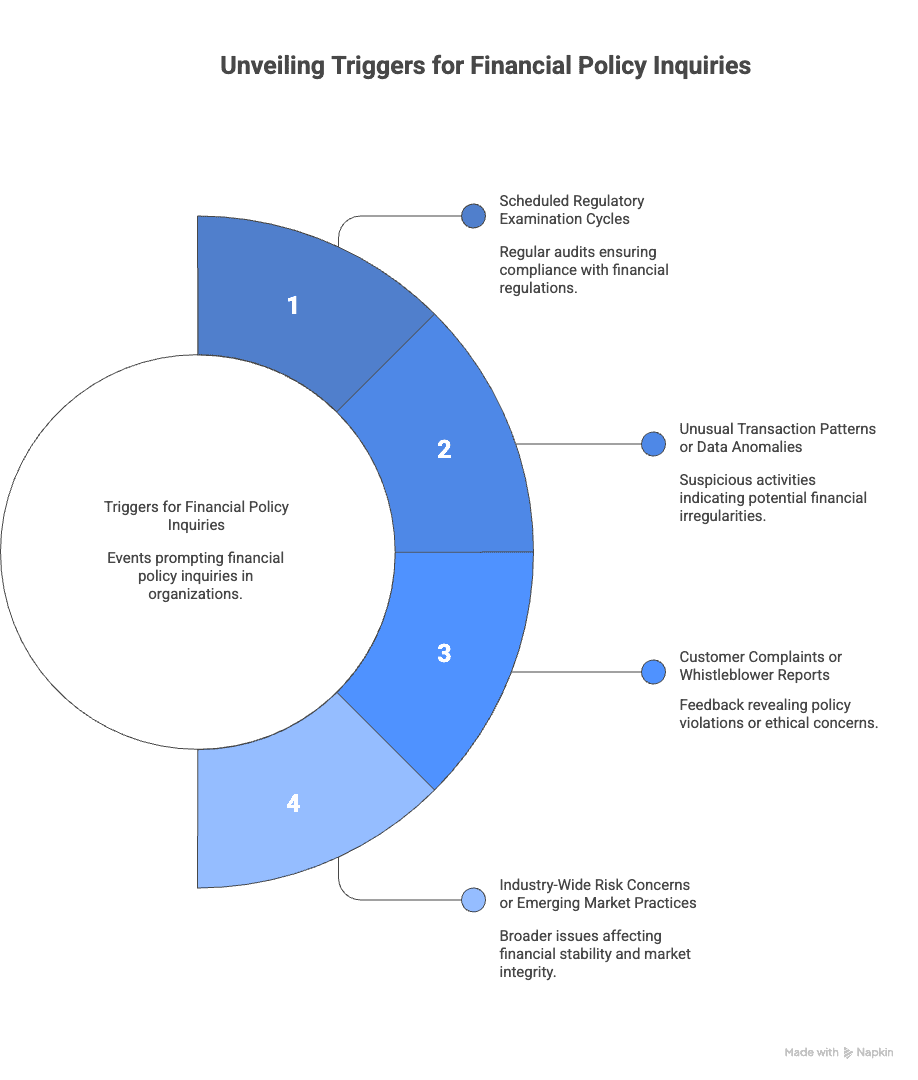
Financial Policy Inquiries may be triggered by:
- Scheduled regulatory examination cycles
- Unusual transaction patterns or data anomalies
- Customer complaints or whistleblower reports
- Industry-wide risk concerns or emerging market practices
Understanding what triggers different types of inquiries allows organizations to prepare and respond appropriately.
The Evolving Regulatory Environment in 2026
Digital Transformation and Advanced Oversight
Regulators now leverage advanced analytics, automation, and large-scale data processing to detect compliance issues. As a result, Financial Policy Inquiries in 2026 are more data-driven, targeted, and precise than ever before.
Organizations should assume regulators can identify patterns and anomalies quickly—often before issues become visible internally.
Increased Cross-Border Regulatory Coordination
Financial activities frequently span multiple jurisdictions. Regulators have responded by increasing cooperation and information-sharing across borders. For international businesses, a single Financial Policy Inquiry may involve multiple regulatory authorities reviewing the same response.
High-Focus Regulatory Areas
In 2026, regulators are paying closer attention to:
- Digital assets and cryptocurrency transactions
- Embedded finance and platform-based financial services
- AI-driven lending, underwriting, and risk assessment
- Climate risk and sustainability disclosures
Organizations operating in these areas should expect increased Financial Policy Inquiry activity.
Types of Financial Policy Inquiries Businesses Encounter
Routine Regulatory Examinations
Routine examinations occur on fixed cycles based on factors such as organization size, risk profile, and sector. These inquiries typically follow standardized frameworks and allow sufficient preparation time.
Targeted Investigations
Targeted Financial Policy Inquiries focus on specific concerns, such as suspicious transactions or alleged misconduct. These inquiries often require rapid response and carry higher regulatory risk.
Thematic Reviews
Thematic reviews assess specific issues across multiple organizations—such as fee transparency, fair lending, or cybersecurity practices. They help regulators identify systemic trends and establish future expectations.
Policy Effectiveness Reviews
These broader inquiries evaluate whether existing regulations remain effective and proportionate. Businesses can influence future regulatory direction through thoughtful participation and feedback.
Building an Effective Financial Policy Inquiry Response Framework
Governance and Accountability
Successful inquiry management starts with clear ownership. Organizations should assign responsibility for regulatory engagement and inquiry coordination, with appropriate senior leadership and board-level oversight.
Documentation and Record Management
Well-organized, easily accessible documentation is critical. Regulators expect timely, complete, and accurate responses. Strong record-keeping demonstrates operational discipline and compliance maturity.
Internal Controls and Ongoing Monitoring
Regular testing of internal controls helps identify issues before they trigger Financial Policy Inquiries. Organizations that self-detect and remediate issues typically receive more favorable regulatory treatment.
Training and Staff Awareness
Employees should understand compliance requirements, inquiry escalation processes, and appropriate regulator interactions. Ongoing training ensures readiness as regulations evolve.
Responding to Financial Policy Inquiries: Strategic Considerations
Initial Inquiry Assessment
Organizations should quickly assess:
Inquiry scope and objectives
Expected timelines
Potential regulatory exposure
This assessment informs response strategy and determines whether legal or external advisory support is required.
Communication Strategy
A cooperative, transparent approach generally leads to better outcomes. However, responses must be accurate, reviewed, and aligned with the inquiry scope. Poorly phrased or informal communications can create unintended regulatory risks.
Resource Planning
Financial Policy Inquiries often require significant time and expertise. Adequate resource allocation prevents delays and demonstrates seriousness to regulators.
Cross-Functional Coordination
Complex inquiries typically involve compliance, legal, operations, technology, and business teams. Strong coordination avoids inconsistencies and ensures a unified response.
Managing Inquiry Outcomes and Remediation
Addressing Regulatory Findings
When issues are identified, organizations should focus on root-cause remediation—not just surface-level fixes. Regulators assess both corrective actions and long-term prevention efforts.
Monitoring Remediation Effectiveness
Post-remediation testing and monitoring demonstrate sustained compliance improvements and reduce repeat findings.
Organizational Learning
Each Financial Policy Inquiry provides insight into regulatory expectations. Post-inquiry reviews help refine policies, controls, and response frameworks.
Long-Term Regulatory Relationship Management
Ongoing engagement, transparency, and proactive communication strengthen regulatory trust and improve future inquiry outcomes.
The Role of Technology in Financial Policy Inquiries
Data Management and Retrieval Systems
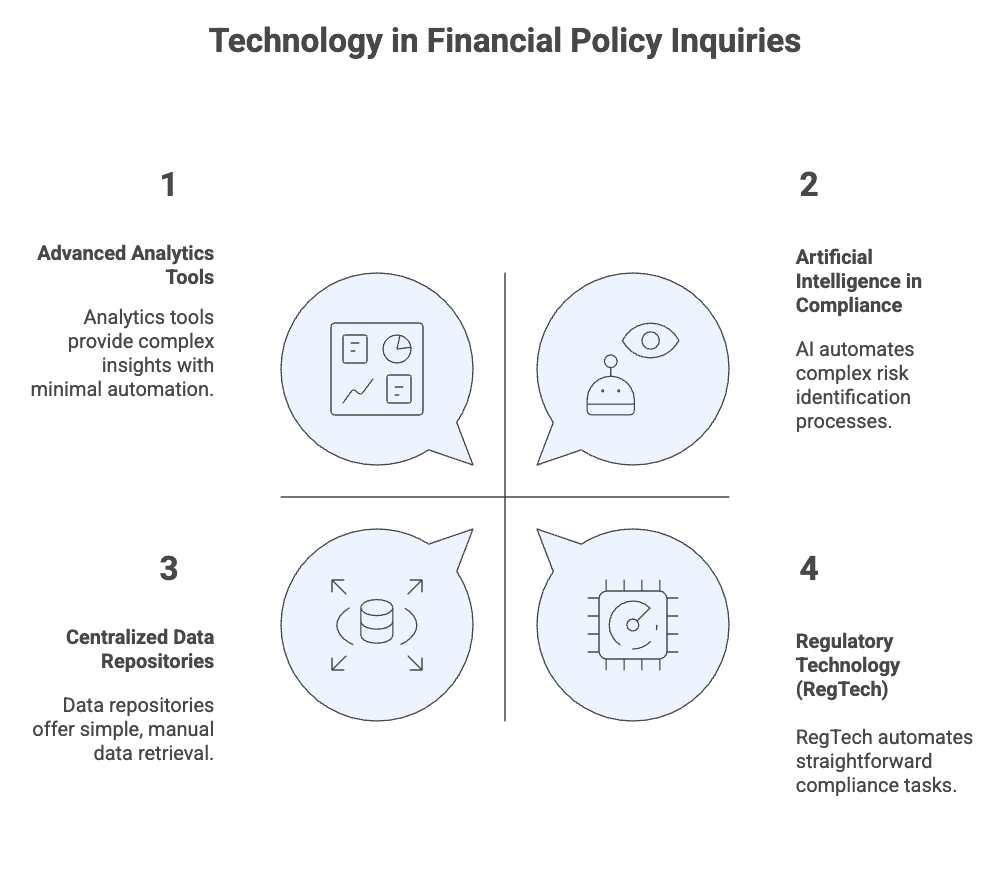
Centralized, searchable data repositories enable faster and more accurate inquiry responses.
Analytics and Monitoring Tools
Advanced analytics help detect compliance issues early and support efficient data analysis during inquiries.
Regulatory Technology (RegTech)
RegTech solutions automate compliance workflows, maintain audit trails, and support reporting requirements.
Artificial Intelligence in Compliance and Supervision
AI is increasingly used by both regulators and organizations to identify risks and anomalies. Understanding how regulators use AI helps businesses anticipate inquiry focus areas.
Preparing for the Future of Financial Policy Inquiries
Expanding Regulatory Scope
Emerging financial models and technologies will continue to attract regulatory attention.
Rising Data and Reporting Expectations
Organizations should invest in data infrastructure capable of supporting increasingly granular regulatory requests.
Climate and Sustainability Regulation
Climate-related Financial Policy Inquiries are expected to grow as regulators integrate sustainability into financial oversight.
Stronger International Coordination
Global organizations should align compliance frameworks across jurisdictions to handle coordinated inquiries effectively.
Conclusion
Financial Policy Inquiries are a permanent feature of modern financial services. Organizations that invest in strong compliance foundations, effective inquiry response frameworks, and constructive regulatory relationships gain a significant advantage.
Rather than viewing Financial Policy Inquiries as disruptions, leading organizations treat them as opportunities to demonstrate integrity, governance strength, and operational excellence.
As regulatory complexity continues to rise in 2026 and beyond, success will belong to businesses that prepare proactively, respond strategically, and continuously improve.
Contact Us
If you found this message inspiring and wish to stay updated with our expert insights, be sure to Follow sourceCode on LinkedIn today!
Additionally, if you are interested in strategic partnerships, innovative technology solutions, or exciting career opportunities, don't hesitate to visit our official website: sourcecode.com.au