Premium Collection for Insurers: Reduce Lapses, Improve Cash Flow
Premium Collection for Insurers has become one of the most critical operational challenges in today’s insurance landscape. Missed premiums are no longer a minor administrative issue; they directly translate into policy lapses, lost revenue, higher servicing costs, and frustrated customers.

As insurers scale portfolios and manage increasingly diverse customer segments, traditional collection methods struggle to keep pace. This is where conversational automation, specifically chatbots and voice bots, is reshaping how insurers protect revenue and strengthen customer relationships.
The Real Cost of Inefficient Premium Collection
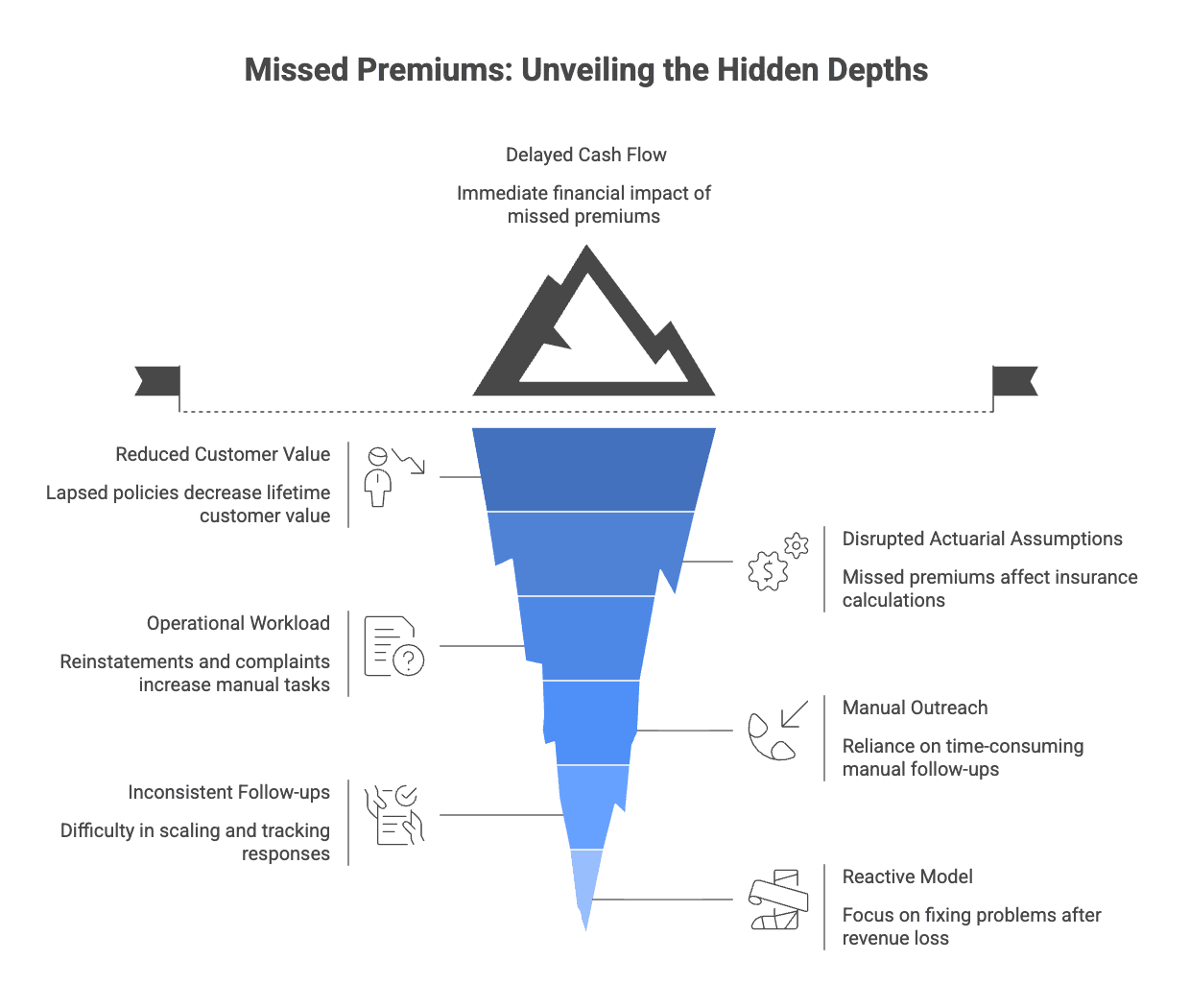
Premium collection sits at the intersection of finance, operations, and customer experience. When a premium is missed, the immediate impact is delayed cash flow. The longer-term impact, however, is far more damaging. Lapsed policies reduce lifetime customer value, disrupt actuarial assumptions, and create downstream operational work such as reinstatements, customer complaints, and manual reconciliations.
For many insurers, premium collection still relies heavily on manual outreach. Operations teams place reminder calls, send batch emails or SMS messages, and track responses across disconnected systems. These processes are time-consuming and difficult to scale. As volumes increase, follow-ups become inconsistent, and high-risk lapse cases are often identified too late. The result is a reactive model that focuses on fixing problems after revenue has already been lost.
Why Customers Miss Premiums More Than Insurers Expect
Understanding the root causes of missed premiums is essential to improving Premium Collection for Insurers. In many cases, customers do not intentionally avoid payment. They forget due dates, overlook emails, miss calls during work hours, or feel uncertain about payment steps. Some customers delay payment because they want reassurance about coverage status or consequences of late payment, while others simply want an easier way to pay without navigating complex portals.
Traditional reminder methods rarely adapt to these realities. A generic reminder message does not address individual hesitation, confusion, or timing preferences. When customers cannot resolve payment issues immediately, the likelihood of delay increases significantly, pushing the policy closer to lapse.
The Shift Toward Conversational Premium Collection
Chatbots and voice bots introduce a fundamentally different approach to premium collection. Instead of treating reminders as one-way notifications, conversational systems engage customers in real time, guiding them toward resolution. This shift transforms Premium Collection for Insurers from a transactional process into an interactive experience.
A chatbot can reach customers through familiar digital channels and initiate a natural conversation about upcoming or overdue premiums. A voice bot can do the same over automated calls, handling large volumes simultaneously without the limitations of human calling capacity. Together, these tools create consistent, scalable outreach that does not depend on agent availability.
Improving Collection Rates Through Timely, Personalized Conversations
One of the strongest advantages of chatbots and voice bots is their ability to deliver timely and personalized reminders. Instead of sending the same message to every customer, conversational systems adjust tone, timing, and content based on policy type, payment history, and risk of lapse. A customer with a strong payment record may receive a friendly nudge, while a high-risk account may trigger a more proactive engagement.
Because these interactions feel conversational rather than automated, customers are more likely to respond. The system can immediately ask whether the customer wants to pay now, schedule a later date, or request assistance. This responsiveness significantly increases the probability of successful premium collection.
Reducing Policy Lapses with In-Conversation Payment Journeys
A major reason premiums go unpaid is friction. Customers often need to leave a message, log into a separate system, or wait for an agent to complete payment. Each additional step increases abandonment risk. Conversational bots address this by embedding the payment journey directly within the interaction.
During a chat or call, the bot can explain the payment status, outline the impact of non-payment in clear language, and guide the customer through available payment options. When customers can act immediately, without switching channels or repeating information, completion rates rise. This seamless experience directly contributes to lower lapse rates and stronger cash flow.
Shortening Follow-Up Cycles with Intelligent Automation
Premium Collection for Insurers often suffers from long follow-up cycles. Manual teams must decide when to call again, whom to prioritize, and when to escalate issues. Chatbots and voice bots automate this logic. They can follow up automatically after predefined intervals, adapt messaging based on customer responses, and stop outreach once payment is confirmed.
If a customer indicates uncertainty or asks a complex question, the system can escalate the conversation to a human agent with full context. This ensures that agents focus their time on cases that genuinely require expertise, while routine follow-ups are handled automatically. The result is faster resolution and a more efficient use of operational resources.
Lowering Operational Costs Without Sacrificing Control
Cost reduction is a major driver behind automation initiatives, but insurers cannot afford to lose control over customer interactions. Chatbots and voice bots reduce costs by handling high volumes of repetitive tasks, yet they are designed to work alongside human teams. This hybrid model allows insurers to maintain oversight, apply escalation rules, and intervene when needed.
By reducing the number of manual calls and emails, insurers can lower staffing costs, reduce agent burnout, and reallocate resources toward higher-value activities. At the same time, consistent automation ensures that no customer is overlooked due to workload constraints.
Human-in-the-Loop as a Core Design Principle
Effective Premium Collection for Insurers does not remove humans from the process entirely. Instead, it introduces human-in-the-loop workflows that balance efficiency with empathy. Conversational systems handle standard cases, while complex or sensitive situations are transferred to trained agents.
This approach improves outcomes on both sides. Customers feel supported rather than pressured, and agents receive better-prepared interactions with clear histories and next steps. Human-in-the-loop design is particularly important in insurance, where trust and clarity play a central role in long-term customer retention.
Compliance, Consent, and Auditability in Conversational Collection
Insurance operations operate under strict regulatory and compliance requirements. Any solution used for premium collection must ensure proper consent capture and maintain detailed records. Chatbots and voice bots can be designed to explicitly request customer consent, record acknowledgments, and log every interaction in a structured manner.
This built-in audit trail supports internal reviews, regulatory checks, and dispute resolution. Unlike fragmented manual notes or call logs, conversational records provide a complete and consistent view of customer communication, reducing compliance risk while increasing transparency.
Integration with Core Insurance Systems
For conversational automation to truly improve Premium Collection for Insurers, it must integrate with core systems such as policy administration, billing, and payment platforms. Integration enables real-time status checks, ensuring customers are not contacted unnecessarily after payment is made.
When bots can confirm payment status instantly, interactions become more accurate and trustworthy. Customers receive relevant information, operations teams avoid redundant outreach, and overall confidence in the collection process increases.
Business Outcomes Beyond Cash Flow
While improved cash flow is a primary goal, the benefits of conversational premium collection extend further. Insurers often observe stronger customer satisfaction, reduced complaint volumes, and better retention. Customers appreciate proactive, respectful communication that helps them stay protected rather than penalizing them for missed deadlines.
Internally, operations teams gain clearer visibility into collection performance, risk patterns, and customer behavior. These insights can inform broader strategies around product design, pricing, and customer engagement.
Conclusion: Reframing Premium Collection as a Conversational Experience
Premium Collection for Insurers is no longer just about reminding customers to pay. It is about creating timely, contextual, and frictionless interactions that help customers fulfill their commitments while protecting insurer revenue. Chatbots and voice bots enable this shift by combining automation, personalization, and human oversight into a single conversational layer.
As insurers look to reduce lapses, stabilize cash flow, and control operational costs, conversational automation is emerging as a practical and scalable solution. By treating premium collection as an ongoing dialogue rather than a series of disconnected reminders, insurers can build stronger financial outcomes and more resilient customer relationships at the same time.
Contact Us
Connect with sourceCode
If you found this message inspiring and wish to stay updated with our expert insights, be sure to Follow sourceCode on LinkedIn today!
Additionally, if you are interested in strategic partnerships, innovative technology solutions, or exciting career opportunities, don't hesitate to visit our official website: sourcecode.com.au